
Ever wondered how ordinary people build passive income streams from their laptops? This guide reveals the simple framework behind one of today’s most accessible online business models. Unlike gig work or traditional jobs, this approach lets you earn while focusing on what matters most – your time and freedom.
Take Sarah from Texas, who turned her baking blog into a $150k/year income through product recommendations. Or Jason, a fitness enthusiast now making $8k monthly by sharing supplements he loves. Their journeys started with basic websites and genuine enthusiasm – no tech expertise required.
Here’s what makes this model unique: You partner with brands, promote their products, and earn commissions on sales. The magic? Your earnings grow even when you’re not actively working. We’ll show you how to:
– Choose profitable niches that match your interests
– Build trust with authentic content
– Avoid common pitfalls that trip up newcomers
Throughout this guide, you’ll find real screenshots of income reports and practical checklists. Whether you want extra cash or full-time freedom, the blueprint works if you’re ready to learn. Let’s begin your journey.
Understanding Affiliate Marketing Fundamentals
In today’s digital economy, partnerships between creators and brands fuel countless online success stories. At its core, this system rewards individuals for connecting customers with products they genuinely value—no inventory or customer service required.
What Is This Partnership Model?
Businesses create affiliate programs to expand their reach. When you join, you receive unique URLs that track sales generated through your content. These special links act like digital breadcrumbs, helping companies identify which referrals come from your efforts.
The Tracking Process Explained
When someone clicks your affiliate link, a cookie gets stored in their browser. This tiny file tracks purchases for 30-60 days, depending on the program. Even if the buyer explores other sites first, your referral stays credited. PayPal’s program, for example, compensates partners when users sign up through their links—even if purchases happen weeks later.
Joining these programs typically involves:
- Applying through networks like Amazon Associates or ShareASale
- Receiving approval from the brand
- Accessing personalized tracking links in your dashboard
This system benefits everyone: Brands grow sales, customers discover solutions, and you earn commissions for making the connection.
Why Affiliate Marketing is a Game Changer
Gone are the days of trading hours for dollars in a rigid 9-to-5. Unlike traditional client work, this model lets you earn recurring income by promoting products and services you already love. A single review or tutorial can generate sales for years, freeing you from the “work once, get paid once” grind.

Take Mia, a stay-at-home mom in Ohio. She turned her Instagram baking tutorials into a $12k/month income by recommending kitchen tools. Her secret? Leveraging social media to showcase products in action. “I post one reel, and it keeps driving sales while I’m with my kids,” she says.
Scalability is where this shines. Jason, a part-time fitness coach, earns $3,500 monthly by linking workout gear in his YouTube descriptions. He tripled his income by repurposing content across TikTok and Pinterest—all without increasing his workload.
Platforms like products and services marketplaces make it easy to find high-commission partnerships. Skincare brands often offer 20-30% per sale, while software companies pay lifetime recurring fees. The key? Align with brands your audience already trusts.
This isn’t luck—it’s strategy. Start small, stay consistent, and let your genuine enthusiasm guide you. Your laptop could become the most powerful tool in your make money toolkit.
Picking the Right Niche for Affiliate Success
Finding your perfect niche is like discovering a hidden trail in a crowded forest—it leads to rewards others miss. The sweet spot? Combining what excites you with what people actively buy. For instance, Mia’s kitchen gadget success came from merging her baking passion with Amazon’s top-selling home goods.
Identifying Profitable Niches
Start by exploring affiliate networks like ShareASale or CJ Affiliate. These platforms show trending categories, from eco-friendly products to pet tech. Use free tools like Google Trends to spot rising interests—yoga mats spiked 240% last year, creating opportunities for fitness creators.
Ask yourself: Can I create content about this for years? Jason’s supplement reviews work because he genuinely uses the products. Align your niche with market demand and personal expertise for authentic marketing work.
Evaluating Competition and Demand
Check search volume vs. competition using Ubersuggest or SEMrush. Low-competition keywords like “best organic dog treats” often hide goldmines. One blogger found 15k monthly searches for this phrase with minimal rival content—now her site earns $1,200/month through passive income.
Remember: Sustainable niches balance audience size and monetization potential. Test ideas by joining 2-3 affiliate networks in your field. Track what converts, then double down. Your platform becomes a sales engine that works while you sleep.
Creating a Platform: Blog vs. YouTube
Your content home base determines how audiences discover and engage with your recommendations. Blogs offer full ownership and long-term SEO advantages, while YouTube taps into video’s explosive growth. Let’s break down both paths.
Written platforms shine for evergreen content. Recipe blogs, for example, can rank for years on Google, driving consistent traffic to product reviews. One study shows blog posts generate 3x more leads than social media. You control design, monetization, and user data—critical for building email lists.
Video channels thrive on personality-driven content. Tech reviewers often see higher conversion rates when demonstrating gadgets in action. YouTube’s algorithm favors watch time, pushing popular videos to new viewers. But platforms can change rules overnight—unlike your own website.
- Blog pros: Better SEO control, direct affiliate link placement, lower production costs
- YouTube pros: Higher engagement rates, built-in audience, visual product demonstrations
Choose based on your strengths. Introverts might prefer writing detailed guides, while natural performers excel on camera. Some creators combine both—posting tutorials on YouTube and linking to blog posts with exclusive discount codes.
Test formats for 90 days before committing. A beauty blogger might start with Instagram Reels, then transition to long-form blog content. Remember: Trust grows when you consistently solve problems, whether through written tutorials or hands-on video demos.
Setting Up Your Website or Blog
Your online platform acts as your digital storefront—the foundation where visitors become customers. A professional site builds credibility and converts clicks into money through strategic content and smart design choices. Let’s explore how to construct this vital asset.
Choosing the Right Hosting and Domain
Reliable hosting ensures your site stays fast and secure. Top performers like ChemiCloud offer 99.9% uptime for under $3/month, while Scala Hosting provides free daily backups—critical for protecting your product reviews. Rocket.net stands out with edge caching for global audiences.
Your domain name should be memorable and niche-specific. Use Namecheap’s bulk search tool to find available options. One travel blogger secured “WanderFuelGear.com” to promote hiking equipment, making her links instantly recognizable.
Selecting Themes and Essential Plugins
Lightweight themes like GeneratePress load in 0.5 seconds, keeping visitors engaged. Successful creators pair these with three core tools:
- Rank Math SEO for optimizing content
- WP Rocket to boost page speed
- MonsterInsights for tracking earnings
A tech reviewer increased conversions by 40% after switching to Astra Theme’s pre-built templates. Remember: Every plugin affects performance. Audit monthly and remove unused add-ons.
Installation takes 15 minutes with most hosts’ one-click WordPress setup. Focus on creating valuable content immediately—detailed guides outperform sales pitches long-term. For a complete roadmap, explore this beginner’s guide to monetizing your platform.
Step-by-Step: How to Start Affiliate Marketing
Strategic collaborations begin when you align your platform with brands your audience trusts. This process transforms genuine recommendations into revenue streams through systematic planning. Let’s break down the essentials.

Finding Your Perfect Brand Matches
Begin by researching programs in your niche through networks like ShareASale or Impact. Fitness creators often find success with supplement companies offering 20-30% commissions. Tech reviewers partner with software brands for recurring payouts.
Follow these steps to get started:
- Sign up for 2-3 networks (ShareASale, CJ Affiliate, Awin)
- Search for brands using filters like “health” or “home goods”
- Review commission rates and cookie durations
- Apply through the network’s portal
Approval times vary. Beauty programs often respond within 48 hours, while financial services might take a week. Diversify by joining both large networks and direct brand programs. One creator increased earnings by 65% using this mix.
Optimizing Your Application Strategy
Increase approval chances by showcasing your platform’s value. Include monthly traffic stats and content samples. Networks prioritize partners who can drive quality sales.
Pro tip: Start with smaller brands to build credibility. Eco-friendly product companies often welcome new promoters. As your platform grows, approach competitive programs like Amazon Associates.
Track performance using network dashboards. Notice which products convert best? Double down on those partnerships. Remember—consistent effort turns initial steps into sustainable income.
Maximizing Affiliate Networks and Programs
Smart creators treat affiliate networks like a garden—cultivating partnerships that bloom into recurring revenue streams. Top platforms like CJ Affiliate and ShareASale offer thousands of programs, but success comes from strategic selection. Focus on 3-5 high-converting partners aligned with your niche to avoid spreading efforts too thin.
Balance multiple programs by tracking performance weekly. Use network dashboards to compare conversion rates and cookie durations. For example, Rakuten’s travel offers might convert better than home goods during summer months. Adjust your content mix based on seasonal traffic patterns and audience interests.
Boost results by pairing email campaigns with product reviews. Segment your list into groups like “fitness enthusiasts” or “budget travelers” for targeted promotions. One creator increased earnings by 70% after sending personalized gear recommendations to subscribers.
Build lasting relationships with program managers by sharing content calendars and performance reports. Many offer exclusive deals or higher commissions to trusted partners. Regularly prune underperforming links and test new offers—your niche expertise helps identify what resonates.
Remember: Quality beats quantity. A skincare blogger tripled earnings by focusing on 4 premium brands instead of 20 generic ones. Let data guide your choices, but always prioritize relevance to your audience’s needs.
Leveraging Quality Content for Affiliate Success
Great content acts as the bridge between curiosity and purchase decisions. When your website becomes a trusted resource, visitors return for solutions—not just sales pitches. One outdoor gear blogger grew earnings by 300% after switching from generic reviews to detailed trail guides with embedded product links.

Focus on solving problems first. A kitchenware YouTuber shares “worst-to-first” recipe videos, naturally incorporating affiliate links to tools that fix common baking fails. Her audience appreciates the practical value, driving a 45% click-through rate on recommended items.
Consistency builds authority. Posting weekly tutorials or comparison charts positions you as a go-to expert. A tech reviewer tripled his income by sticking to a Tuesday/Thursday content schedule. Followers began bookmarking his site for pre-purchase research.
Authenticity matters more than ever. Disclose partnerships clearly, but let genuine enthusiasm shine. A skincare influencer credits her 80k-strong community to honest “night routine” videos showing real product results. She declines promotions for items she wouldn’t use personally.
Three actionable steps to begin:
- Create product roundups answering specific questions (“Best budget cameras for food photography”)
- Embed links in step-by-step tutorials viewers bookmark
- Update old posts monthly with new insights and recommendations
Your content strategy becomes a audience growth engine when you prioritize value over quick sales. Start small—one in-depth guide this week—and watch trust compound over time.
Integrating Affiliate Links Seamlessly
Strategic link placement transforms casual readers into loyal customers. The art lies in blending recommendations with value-driven content—like adding seasoning to a recipe. Done right, these connections feel helpful rather than salesy.
Where Links Work Best
Position links where they answer questions or solve problems. Tutorials benefit from tool recommendations, while product roundups shine with comparison charts. A travel blogger boosted commissions by 55% placing gear links in packing lists for specific climates.
Tools like ThirstyAffiliates simplify management. This plugin lets you:
- Cloak ugly URLs with clean permalinks
- Track click-through rates per link
- Bulk-update expired offers
One tech reviewer increased earnings by organizing links into categories—green for software trials, blue for hardware. Readers appreciated the visual cues, leading to 30% more clicks.
Balance is key. Overloading posts with links erodes trust. Stick to 2-3 per 1,000 words, focusing on contextual relevance. Review analytics weekly to identify top-performing placements.
Avoid “click here” phrases. Instead, use natural language: “This lightweight tent survived my Alaska trek”. Successful creators embed links in comparison tables, FAQs, and resource libraries—places visitors actively seek solutions.
Remember: Every link should enhance the reader’s experience. Test placements for 60 days, then refine based on program performance data. Your blog becomes a trusted guide when links feel like helpful suggestions, not interruptions.
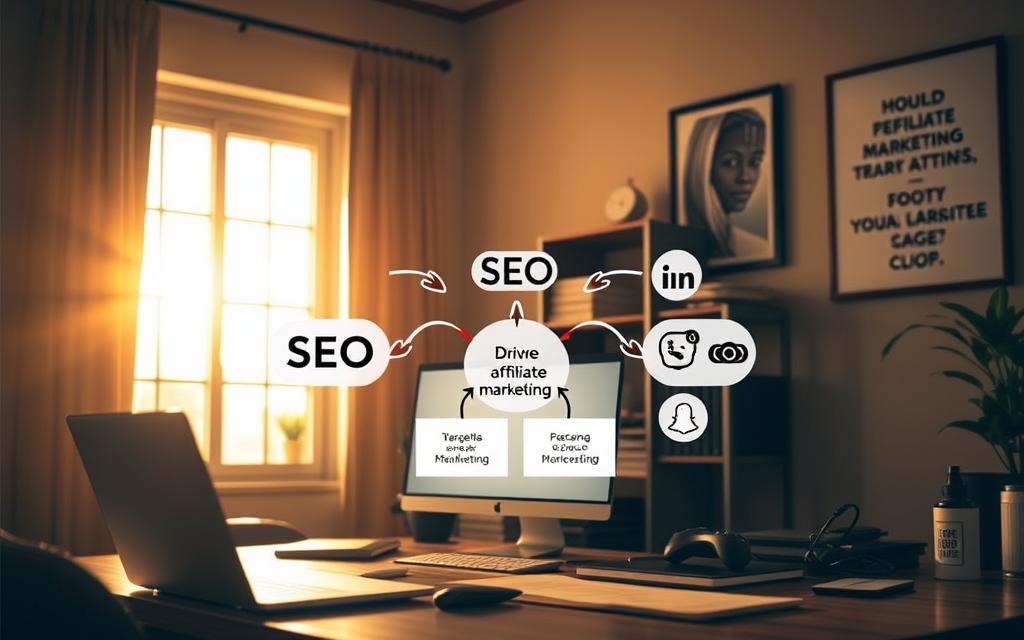
Driving Targeted Traffic with SEO and Social Media
Mastering traffic generation separates hobbyists from serious earners in the digital space. The right mix of search engine tactics and community-building creates a sustainable pipeline for your platform. Let’s explore proven methods to attract visitors who convert into long-term supporters.
Climbing Search Rankings Strategically
SEO transforms your content into a 24/7 sales engine. Start with keyword research using free tools like Google Keyword Planner. Target phrases like “best budget hiking gear” that balance search volume and competition. One outdoor blogger tripled her income by optimizing old posts for seasonal terms like “winter camping essentials”.
On-page optimization matters most. Include keywords in:
- Headings and subheadings
- First 100 words of content
- Image alt text and meta descriptions
Structure articles with clear tables of contents for better crawlability. A tech reviewer increased organic traffic by 80% using this SEO checklist alongside video tutorials.
Amplifying Reach Through Social Channels
Platforms like Pinterest drive consistent referral traffic when used intentionally. Create pins with keyword-rich descriptions linking to your latest guides. A home decor creator generates 300 monthly sales by sharing before/after room makeovers with product tags.
Email marketing complements these efforts. Send weekly newsletters featuring:
- Exclusive discount codes
- Roundups of top-performing products
- Behind-the-scenes content showing real-world use cases
One fitness influencer attributes 40% of her income to email campaigns targeting specific workout preferences. Track open rates and adjust send times using tools like MailerLite.
Success requires patience. Update content quarterly and test new social formats like Instagram Guides. Over time, these efforts compound—turning casual visitors into loyal customers who trust your recommendations.
Harnessing Coupon Codes and Special Offers
Savvy creators know discount strategies turn browsers into buyers. Exclusive offers create urgency—think limited-time deals that nudge hesitant shoppers. HostGator partners saw 200% higher conversions when promoting unique coupon codes versus generic links.
Special links work because they deliver instant value. A travel gear blogger boosted sales by 75% after negotiating 15% off codes with luggage brands. These incentives help audiences feel they’re getting insider access, strengthening trust in your platform.
To secure exclusive deals:
- Approach brands with clear traffic stats and engagement metrics
- Propose win-win terms: “Promote your product for 30 days in exchange for a subscriber-only code”
- Test expiration dates—72-hour codes often outperform month-long offers
Integrate coupons naturally. Place them in tutorial videos, email signatures, and comparison charts. One tech reviewer embedded discount links in YouTube descriptions, driving $8k monthly from software subscriptions.
Always disclose partnerships clearly. Phrases like “Our team negotiated this exclusive deal” maintain transparency while highlighting your value. Track performance using UTM parameters to refine future promotions.
Building Trust and Community Engagement
What separates casual promoters from trusted advisors in crowded online spaces? Authentic connections turn one-time clicks into lifelong supporters. Your audience craves realness—not polished sales pitches.

Establishing Authority with Authentic Content
Marketers who share personal struggles gain deeper loyalty. A skincare creator’s acne journey video drove 3x more sales than generic tutorials. Why? Vulnerability builds credibility faster than perfection.
Three ways to strengthen trust:
- Show behind-the-scenes footage of products in daily use
- Compare items honestly—highlight flaws alongside benefits
- Respond to comments with personalized advice
Community platforms like Reddit threads or Facebook groups create ongoing dialogue. One outdoor gear reviewer hosts monthly AMAs, answering questions about his latest hiking tests. These interactions provide fresh content ideas while strengthening relationships.
Consistency matters more than frequency. Posting weekly relatable stories works better than daily generic updates. Track engagement patterns to find your ideal rhythm—many find Tuesday mornings optimal for US audiences.
Transparency fuels growth. When a kitchen tool failed during a live stream, the creator’s refund tutorial became her most-shared video. Mistakes humanize your brand when handled with integrity.
Avoiding Common Affiliate Marketing Pitfalls
Navigating affiliate partnerships requires more than enthusiasm—it demands smart strategy to sidestep hidden traps. New creators often stumble by treating their site like a billboard rather than a resource. One blogger lost her Google rankings after stuffing 12 links into a 500-word post, only to recover traffic by focusing on in-depth guides.
Three frequent missteps to avoid:
- Overloading pages with promotions: Balance affiliate links with actionable tips (aim for 80% value, 20% sales)
- Ignoring site speed: Pages taking 3+ seconds to load increase bounce rates by 32%
- Single-network dependence: Relying solely on Amazon Associates left many creators scrambling when commission rates dropped
Your platform’s design impacts credibility. Cluttered layouts with pop-ups annoy visitors, while slow mobile optimization hurts search rankings. Use tools like Google PageSpeed Insights to maintain performance. A travel gear reviewer boosted conversions by 25% after simplifying navigation and adding product comparison tables.
Stay compliant by:
- Placing FTC disclosures above the fold
- Updating expired offers monthly
- Testing links across devices
Diversify income streams across multiple services and networks. When a tech YouTuber’s top program changed its cookie duration, his earnings stayed stable through partnerships with three alternative providers. Regular content audits prevent reliance on outdated strategies—update old posts with fresh insights and current deals.
Build trust through authentic media integration. Share genuine product experiences in video demos or case studies. A skincare creator gained 15k followers by documenting her 30-day trial of recommended serums. Remember: Your audience values transparency more than perfection.
Measuring Success and Tracking Conversions
Numbers don’t lie—they reveal exactly what’s working in your partnership strategy. Tools like Google Analytics and PayPal’s reporting dashboard turn guesswork into actionable insights. Start by linking your accounts to track clicks, sales, and customer paths across devices.

Using Analytics Tools Effectively
Install Google Analytics through your platform’s header code. Create custom dashboards to monitor:
- Click-through rates on specific links
- Conversion paths across blog posts or videos
- Geographic trends in buyer behavior
One travel blogger discovered 60% of her gear sales came from weekend readers. She shifted content updates to Fridays, boosting conversions by 22%. PayPal’s affiliate reports help cross-check earnings against traffic sources—ideal for spotting high-value content.
Prioritize these metrics weekly:
- Average earnings per visitor
- Top-performing product categories
- Bounce rates on promotional pages
Adjust strategies based on patterns. A tech reviewer noticed tutorials with videos generated 3x more sales than text-only guides. He redesigned his content calendar to prioritize video demos, increasing monthly revenue by $1,800.
Regular audits prevent stagnation. Update UTM parameters quarterly and test new link placements. Your guide to success evolves as you learn which content types and formats resonate most with your audience’s needs.
Legal Considerations and FTC Regulations
Trust forms the backbone of every successful online partnership. The FTC requires clear disclosures whenever you earn commissions from product links. Place notices above the fold on your site—not buried in footers—using simple language like “We may earn a fee if you buy through our links.”
Three legal essentials for U.S.-based creators:
- Disclose relationships before any affiliate link or product mention
- Avoid vague terms like “sponsored” when specifically earning commissions
- Update disclosures when partnering with new brands
The FTC’s .gov website offers free compliance resources, including video guides and template disclosures. One travel blogger avoided $11k in fines by using their official endorsement guidelines document. Proper transparency protects your audience from misleading claims while shielding you from legal risks.
Building trust through ethical practices pays long-term dividends. Brands increasingly prioritize partners with clean compliance records—89% of surveyed companies in 2023 said disclosure integrity influenced partnership renewals. Regular audits using FTC resources keep your content aligned with evolving standards.
Remember: Honesty strengthens community bonds. Share behind-the-scenes details about how you vet products, and explain your disclosure practices in an FAQ section. When audiences feel informed, they’re 73% more likely to support your recommendations repeatedly.
Conclusion
Building a sustainable online income requires patience, but the rewards multiply over time. Success comes from blending strategic link placement with genuine value—not quick schemes. Remember: Quality content outlives trends, and trust grows through consistent effort.
Your journey starts with small, focused steps. Apply the search analytics and email strategies discussed to refine your approach. Track what works, adapt to audience feedback, and let compound growth do the heavy lifting.
This path offers more than extra cash—it’s a gateway to location freedom and flexible hours. While early days demand work, systems eventually run themselves. One creator now earns $9k monthly from posts written three years ago.
Stay curious. Update old content, test new formats, and prioritize learning. Subscribe for advanced tips via email to accelerate your progress. Your first sale might be weeks away, but every effort builds momentum.
Ready to begin? Pick one action from this guide today. Whether launching a blog or joining your first program—consistency beats perfection. The digital marketplace waits for no one, but your seat remains open.